Cold water takes heat from your hands quickly, and bare hands are also easy to scrape on rock, line and gear. Diving gloves add warmth and protection, but the right pair depends on the water you dive in.
Divers Alert Network (DAN) says that, in general, the thicker the glove, the better the thermal protection, and that fit matters just as much, because a glove that is too big lets water flow in and out.[1] This guide covers the two glove types, what to look for and six diving gloves from thin 2 mm models to a 5 mm option.
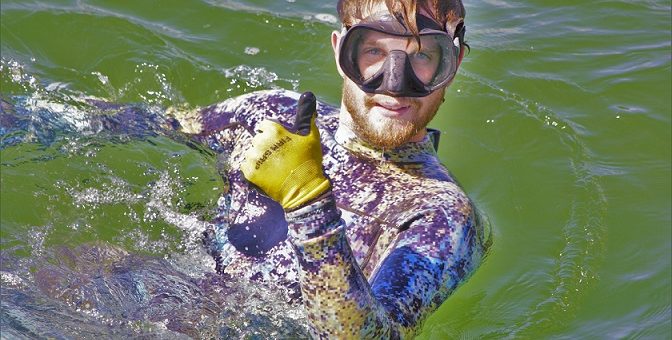
Diving gloves at a glance
- DAN says more neoprene is warmer than less, and that dry gloves are warmer than wet ones.[1]
- Neoprene gloves run from 0.5 mm for tropical water to 7 mm for cold water.[1]
- PADI calls water of 24°C (75°F) or warmer tropical, and water of 15 to 24°C (60 to 75°F) temperate.[2]
- The Cressi, Tusa and Dawncomes are thin gloves for mild water, and the Neo Sport comes in 3 mm and 5 mm.
- The ScubaPro EverFlex and Aqua Lung Deep See are flexible neoprene gloves with sealed or bell-cut wrists.
Do You Need Diving Gloves
Gloves keep your hands warm in cold water and protect them from scrapes, cuts and stings. In warm water some divers skip gloves.
Diving with gloves is warmer than diving without them, and thicker gloves are warmer than thin ones.[1] A glove only helps if it fits, so size it carefully.
Types of Diving Gloves
- Neoprene Gloves – Neoprene is the most common material, in thicknesses from 0.5 mm to 7 mm, and a thicker glove gives more warmth. Some have a grip surface on the palm and fingers.[1]
- Textile Gloves – Divers who hunt, collect or spearfish often wear textile gloves with latex or rubber on the palm. They give good dexterity and protect against sharp objects, but they give little warmth.[1]
- Dry Gloves – Dry gloves attach to a drysuit and are warmer than wet gloves. They need a vent connection to the suit, so they are for drysuit divers.[1]
- Five-Finger Gloves and Mittens – Three-finger mittens are warmer than five-finger gloves, but five-finger gloves give you better finger control.[1]
How to Choose a Diving Glove
- Water Temperature – A guide from The Scuba Doctor suggests 0.5 to 2 mm of neoprene for water over 25°C, 2 to 5 mm for water from 16 to 24°C and 5 to 7 mm for water from 10 to 18°C.[3]
- Fit – A glove that is too big lets water flow through, and one that is too small can restrict blood flow to the hand.[1]
- Wrist Closure – A split wrist has a Velcro strap, and a cuffed or bell-cut wrist has an elastic closure. Either one should seal against your wetsuit sleeve.
- Palm and Grip – A reinforced palm or a textured surface protects your hand and helps you hold gear.
- Flexibility – A thin glove feels like a second skin, and a thick glove is warmer but stiffer.
Features of a Good Diving Glove
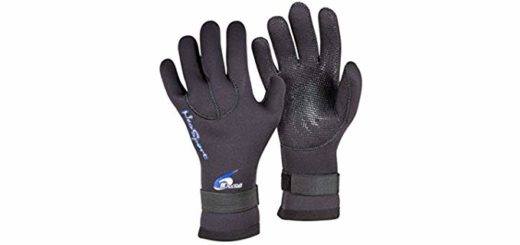
- Thickness – Pick it by the water temperature, since most gloves range from 0.5 mm to 7 mm.[1]
- Seams – Blind-stitched or sealed seams keep water from seeping through the stitching.
- Closure – A Velcro strap, an elastic cuff or a bell-cut wrist should be easy to use with cold hands.
- Lining – A lining makes the glove easier to put on and helps it dry faster.
- Sizing – Check the maker’s size chart, because sizes differ between brands.
How We Chose These Diving Gloves
These picks come from research. This is desk research. We compared the manufacturer specifications and product descriptions for each pick. We did not test the gloves ourselves, and we did not check stock this time.
We looked at these factors:
- Water – The thickness and the water the glove suits.
- Fit – Wrist closure, cuff and size range.
- Protection – Palm reinforcement and padding.
- Flexibility – How the glove feels on your fingers.
Frequently Asked Questions (FAQ) About Diving Gloves
- Are diving gloves warmer than no gloves?
Yes. DAN says diving with gloves is warmer than diving without them.[1] - Which of these gloves suits warm water?
The Cressi Camouflage and the Tusa DG-5100 are 2 mm gloves, and the Dawncomes YNFC is a thin glove, so all three suit mild or warm water. - Which of these gloves suits cooler water?
The Neo Sport Premium comes in a 5 mm thickness. If you dive in cold water, check the thickness on the pair you order. - What happens if my gloves are too big?
Water flows freely in and out of a loose glove, so you lose thermal protection. A glove that is too small can restrict blood flow.[1] - What are dry gloves?
Dry gloves attach to a drysuit and are warmer than wet gloves. They are usually made of PVC and need a vent connection to the suit.[1]
Our Picks: Diving Gloves
Here are 6 diving gloves, from thin 2 mm models to a 5 mm option.
We hope you love the diving gloves we recommend!
So that you know, we may earn a share of sales or other compensation from links on this page. This does not change your price.
1
Cressi® Unisex Camouflage Spearfishing and Diving Gloves


The Cressi Camouflage is a thin 2 mm neoprene glove for diving and spearfishing, in a blue or gray camouflage print.
- Padded palms and padding on the underside of the fingers protect your hands when you hold rock, line or a speargun.
- A Velcro wrist strap adjusts the fit, and the five-finger cut keeps your fingers free.
- At 2 mm it is a warm-water or mild-water glove, not a cold-water one.
2
ScubaPro® Unisex EverFlex Neoprene Diving Gloves


The ScubaPro EverFlex is a soft, flexible neoprene diving glove that comes in two colors.
- The softer neoprene stretches with your fingers, which helps when you handle a camera, a gauge or a clip.
- Blind-stitched seams keep water from seeping through the stitching, and the lining is a quick-drying Diamond Span fabric.
- A single wrist seal limits the water that flows in at the cuff.
3
Dawncomes® Unisex YNFC Thin Neoprene Diving Gloves


The Dawncomes YNFC is a thin diving glove with a soft neoprene back and a reinforced palm and fingertips.
- The neoprene back is soft and flexible, and the palm and fingertips are reinforced for wear.
- A Velcro wrist strap sets the fit, and the glove is sold in an extra large size and a colorful print.
- It is a thin glove, so it suits warm water and light protection.
4
Aqua Lung® Unisex Deep See Flexible Diving Gloves


The Aqua Lung Deep See is a flexible neoprene diving glove with a bell-cut wrist.
- The palm, fingers and finger backs use a hard-wearing synthetic fiber for abrasion resistance.
- A four-way stretch neoprene panel system adds comfort and warmth, and pre-curved fingers and a ribbed back help prevent hand fatigue.
- The bell-cut wrist opening makes the glove easy to put on over a wetsuit sleeve, and an elastic closure limits water exchange.
5
Tusa® Unisex DG-5100 2 mm Neoprene Diving Gloves


The Tusa DG-5100 is a 2 mm neoprene diving glove with a reinforced synthetic suede palm.
- The 2 mm neoprene back gives mild warmth, and the palm has padding and a reinforced synthetic suede surface.
- An adjustable hook-and-loop wristband gives a secure fit.
- It comes in men’s and women’s sizes.
6
Neo Sport® Unisex Premium Flexible Neoprene Diving Gloves


The Neo Sport Premium is a soft neoprene glove that comes in a 3 mm or a 5 mm thickness.
- The two thicknesses let you match the glove to the water, with 5 mm for cooler water.
- A Gator elastic closure fits over a wetsuit sleeve and makes a smooth seal, and a textured palm helps your grip.
- Check which thickness the pair you buy has, since the size options come in both.
Index Table: Top Rated Dive Gloves
| No. | Product | Image | Features | Brand | Score |
|---|---|---|---|---|---|
| 1 | Cressi Unisex Camouflage - Spearfishing and Diving Gloves |  |
| Cressi | - |
| 2 | ScubaPro Unisex EverFlex - Neoprene Diving Gloves |  |
| ScubaPro | - |
| 3 | Dawncomes Unisex YNFC - Thin Neoprene Diving Gloves |  |
| Dawncomes | - |
| 4 | Aqua Lung Unisex Deep See - Flexible Diving Gloves |  |
| Aqua Lung | - |
| 5 | Tusa Unisex DG-5100 - 2 mm Neoprene Diving Gloves |  |
| Tusa | - |
| 6 | Neo Sport Unisex Premium - Flexible Neoprene Diving Gloves |  |
| Neo Sport | - |
Sources
- Divers Alert Network (DAN). Hand Protection. Accessed October 27, 2026.
- PADI. Scuba Gear FAQ. Accessed October 27, 2026.
- The Scuba Doctor. Dive Gloves Buying Guide. Accessed October 27, 2026.
Update History
- Oct 2026: Rewrote the article around Divers Alert Network and PADI guidance, removed filler wording and the old score tables, rewrote all product notes and added Sources
- Mar 2020: Published


