The right work glove depends on the hazard in front of you: sharp edges, heat, wet and oily parts, or just scrapes and splinters. No single glove covers all of them.
In the United States, OSHA requires employers to base the choice of hand protection on the task, the conditions, how long the glove is worn and the hazards present.[1] Home users can use the same approach. This guide covers glove types, materials and six work gloves, from a light women’s knit glove to a long leather welding glove.
Work gloves at a glance
- OSHA says hand protection should be chosen on the hazards, the task and the conditions.[1]
- The RAPICCA is a 16-inch split cowhide glove that RAPICCA rates to 932°F (500°C) for intermittent heat.[3]
- The Quest glove is rated ANSI cut level A1, the lowest level, so it is for light handling and not for blades.[2]
- The Wells Lamont is PVC coated and waterproof, and the MCR Safety glove is a thin silicone-free knit.
- The Mechanix Wear Original is a general glove for mechanics, and the Carhartt is a women’s knit and leather glove.
Do You Really Need Good Work Gloves
Work gloves protect your hands from scrapes, cuts, abrasions, blisters, splinters, heat, punctures and chemical contact. They also keep your grip and your hands warm in the cold.[1]
They are made from leather, cloth, rubber, nitrile, neoprene or vinyl, and each suits different hazards. Look at your own job first: sharp objects, chemicals, heat and wet conditions each call for a different glove.
Types of Work Gloves
- Light and Blunt Work – For light jobs without puncture or cut risks, a polyurethane-dipped, nitrile or latex glove keeps your hands dry and flexible, with a good grip on slick parts.
- Electrical Work – Live electrical work needs rated insulating rubber gloves. A coated knit glove is not a substitute.
- Chemicals – A coated glove, such as PVC or nitrile, blocks liquids, but chemicals differ. Check the maker’s chemical chart for the product you handle.
- Heat and Cold – Hot work calls for heat-resistant leather, and cold work calls for a waterproof, windproof glove with insulation.
- Sharp Objects – Cut resistant gloves use aramid, Kevlar or other high-strength fibers, and the cut level shows how much protection you get.[2]
Features of a Good Work Glove
- Material – Cotton and bamboo knits are breathable for light jobs. Leather suits construction, welding and landscaping, rubber and coated gloves suit chemicals and wet work, and Kevlar and graphene liners suit cut risks.
- Fit – A glove that is too loose slips and a tight one tires your hand. Pick the size from your hand width.
- Finger Design – Full fingers cover more, and fingerless gloves suit fine work.
- Touchscreen Tips – Some gloves have touchscreen-sensitive fingertips, so you can use a phone with them on.
- Care – Check gloves for holes and wear before each job and replace worn pairs.
How We Chose These Work Gloves
These picks come from research. This is desk research. We compared the manufacturer specifications and product descriptions for each pick. We did not test the gloves ourselves, and we did not check stock this time.
We looked at these factors:
- Hazard – Cut, heat, liquid or general wear.
- Rating – Cut level and heat limit where given.
- Fit – Size, cuff length and closure.
- Dexterity – Thickness and finger feel.
Frequently Asked Questions (FAQ) About Work Gloves
- How do I choose work gloves?
Start with the hazard, then the task and how long you wear them. OSHA bases hand protection on these points.[1] Then check the fit and the closure. - Are cut resistant gloves safe around blades?
Not always. The Quest glove is rated ANSI cut level A1, the lowest, so it is for light handling and not open blades.[2] - Which of these gloves can handle heat?
The RAPICCA is a leather welding glove that RAPICCA rates to 932°F (500°C) for intermittent contact.[3] The other five gloves are not heat gloves. - Can I use work gloves for electrical work?
Only rated insulating rubber gloves are made for live electrical work. A coated knit glove, such as the MCR Safety, is not a substitute. - Which glove suits wet or oily jobs?
The Wells Lamont is PVC coated and waterproof, with a gauntlet cuff for splashes. - Are there work gloves made for women?
Yes. The Carhartt glove here is cut for women’s hands, and many brands sell women’s sizes.
Our Picks: Work Gloves
Here are 6 work gloves for cut, heat, chemical and general jobs.
We hope you love the work gloves we recommend!
So that you know, we may earn a share of sales or other compensation from links on this page. This does not change your price.
1
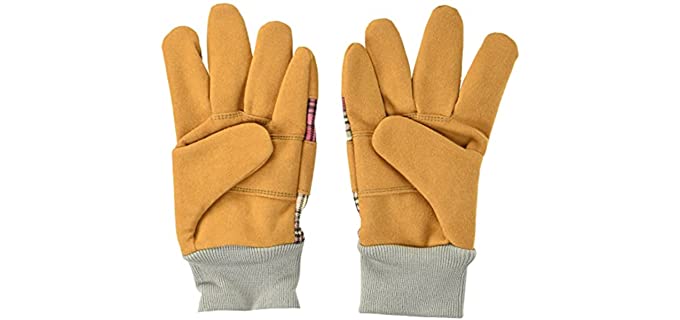
Carhartt® Women's Suede Knit Women's Women's Suede Work Gloves with Knit Cuff


The Carhartt women’s work glove is a cotton-polyester knit glove with leather knuckle protection.
- It is a light glove for gardening, yard work and light industrial jobs.
- It is cut for women’s hands, and the leather knuckles take scrapes.
2
MCR Safety® Unisex 13 Gauge Coated Knit Seamless Knit Work Gloves, Silicone-Free


The MCR Safety glove is a 13-gauge seamless knit glove with a polyurethane coating.
- The thin knit and smooth coating give good feel and grip on small parts.
- It is silicone-free, which matters in shops where silicone can spoil a finish.
- It is a coated knit glove, not an insulating glove, so it does not replace rated rubber gloves for live electrical work.
3
RAPICCA® Unisex 16-Inch Forge Welding Gloves Heat Resistant Leather Welding Gloves


The RAPICCA is a long leather glove for welding, forge work and other hot jobs.
- RAPICCA gives its heat limit as 932°F (500°C) for intermittent exposure, and it makes the glove from 1.5 mm split cowhide with Kevlar stitching, a foil layer and a cotton liner.[3]
- The 16-inch length covers the forearm.
- It is made for brief contact with heat, not for gripping hot metal for long.
4
Wells Lamont® Unisex PVC Gauntlet PVC Coated Chemical Resistant Work Gloves


The Wells Lamont is a PVC-coated glove with a gauntlet cuff, made for wet work and for handling liquids and oils.
- The PVC coating keeps water out and gives a textured grip on wet parts.
- A cotton lining makes it comfortable, and the long cuff keeps splashes off your wrist.
- Check the maker’s chemical chart for the product you handle before you rely on it.
5
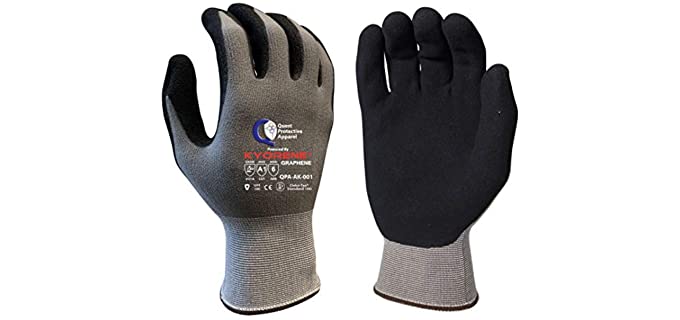
Quest® Unisex Graphene Cut Resistant Lightweight Cut Resistant Work Gloves



The Quest glove is a light 15-gauge graphene knit glove with a nitrile foam palm.
- It is rated ANSI cut level A1 and EN 388 4121A, with abrasion level 6 and puncture level 2, which is the lowest cut level, so it suits light handling and not open blades.[2]
- It is thin and flexible for gardening, DIY, warehouse and maintenance tasks.
- Match the cut level to your task, since A1 is for light edges.
6
Mechanix Wear® Unisex Original Mechanic Work Gloves


The Mechanix Wear Original is a snug synthetic leather glove for mechanics and general work.
- The rubber TPR on the back of the hand protects the knuckles.
- A hook-and-loop closure sets the fit at the wrist, and the seams are kept low for feel.
- It gives good dexterity for tools and fasteners, but it is not a heat, chemical or cut glove.
Index Table: Top Rated Work Gloves
| No. | Product | Image | Features | Brand | Score |
|---|---|---|---|---|---|
| 1 | Carhartt Women's Suede Knit Women's - Women's Suede Work Gloves with Knit Cuff |  |
| Carhartt | - |
| 2 | MCR Safety Unisex 13 Gauge Coated Knit - Seamless Knit Work Gloves, Silicone-Free |  |
| MCR Safety | - |
| 3 | RAPICCA Unisex 16-Inch Forge Welding Gloves - Heat Resistant Leather Welding Gloves |  |
| RAPICCA | - |
| 4 | Wells Lamont Unisex PVC Gauntlet - PVC Coated Chemical Resistant Work Gloves |  |
| Wells Lamont | - |
| 5 | Quest Unisex Graphene Cut Resistant - Lightweight Cut Resistant Work Gloves |  |
| Quest | - |
| 6 | Mechanix Wear Unisex Original - Mechanic Work Gloves |  |
| Mechanix Wear | - |
Sources
- eCFR. 29 CFR 1910.138, Hand Protection (OSHA). Accessed October 27, 2026.
- Armor Guys. Quest/Armor Guys 00-001 graphene cut resistant glove. Accessed October 27, 2026.
- RAPICCA. RAPICCA Leather Forge Welding Gloves. Accessed October 27, 2026.
Update History
- Oct 2026: Rewrote the article around OSHA hand protection guidance and manufacturer specifications, removed filler wording and the old score tables, corrected the cut level and chemical glove notes, rewrote all product notes and added Sources
- Jul 2021: Published


