Electrician gloves are really two kinds of gloves. Rubber insulating gloves, with leather protectors, are the ones that protect against shock. Leather and coated work gloves protect against cuts and scrapes and do not insulate.
This guide explains the OSHA classes and test rules for rubber insulating gloves, then covers six gloves, of which only one, the Enespro Class 0 kit, is an insulating glove.
Electrician gloves at a glance
- OSHA marks insulating gloves by class, from Class 00 (500 volts AC maximum use) up to Class 4 (36,000 volts AC), and Class 0 is 1,000 volts AC.[1]
- OSHA requires rubber insulating gloves to be tested before first issue and every 6 months after, and to be inspected and air tested.[1]
- OSHA marks non-ozone-resistant gloves Type I and ozone-resistant gloves Type II.[1]
- OSHA says employers choose hand protection by the hazard, such as cuts, abrasions and burns.[2]
- Five of the six picks here are work gloves and do not insulate.
Insulating Gloves and Work Gloves
- Rubber Insulating Gloves – Class 00 to Class 4 gloves marked by OSHA class and type. The Enespro Class 0 kit is one of these.[1]
- Leather Protectors – Leather covers worn over rubber gloves to protect them from cuts and punctures.
- Work Gloves – Leather, goatskin and nitrile gloves, such as the Klein, Mechanix, Gatorback and MaxiFlex, handle cuts, scrapes and grip, and none of them insulates.
- Arc and Flame Gloves – The Superior Glove S13FRNE has an arc rating of 11 cal/cm2, which is a different protection from insulation.
OSHA Classes for Insulating Gloves
OSHA 1910.137 sets these maximum use voltages and retest voltages for rubber insulating equipment.[1]
- Class 00 – 500 volts AC maximum use, 2,500 volts AC retest.
- Class 0 – 1,000 volts AC maximum use, 5,000 volts AC retest.
- Class 1 – 7,500 volts AC maximum use, 10,000 volts AC retest.
- Class 2 – 17,000 volts AC maximum use, 20,000 volts AC retest.
- Class 3 – 26,500 volts AC maximum use, 30,000 volts AC retest.
- Class 4 – 36,000 volts AC maximum use, 40,000 volts AC retest.
Each glove is marked with its class, and Type I and Type II mark non-ozone-resistant and ozone-resistant material.[1] Rubber insulating gloves are tested before first issue and every 6 months after, and they are given an air test along with the inspection.[1]
Features of a Good Electrician Glove
- Class and Marking – Match the class to the voltage you work around, and check the marking on the glove.
- Protectors – Leather protectors go over the rubber glove, and OSHA lets Class 00 gloves go without protectors only under limited-use conditions, at up to 250 volts AC, when small parts need unusually high finger dexterity.[1]
- Inspection – The Enespro kit says to inspect the gloves before each use for cracks or tears and to replace them if they are damaged.
- Work Glove Features – Padded knuckles, reinforced palms and a vented back help on the job but do not insulate.
- Hand Protection Rule – OSHA requires employers to select hand protection for the hazards of the task, such as cuts, abrasions and burns.[2]
How We Chose These Electrician Gloves
These picks come from research. This is desk research. We compared the manufacturer specifications and product descriptions for each pick. We did not test the gloves ourselves, and we did not check stock this time.
We looked at these factors:
- Insulation – Whether the glove is a rubber insulating glove with a class.
- Protection – Leather, padding and cut level.
- Fit – Sizes and cuff.
- Care – Inspection and washing.
Frequently Asked Questions (FAQ) About Electrician Gloves
- What is a Class 0 insulating glove?
A Class 0 glove has a maximum use voltage of 1,000 volts AC and a retest voltage of 5,000 volts AC under OSHA 1910.137.[1] - How often are rubber insulating gloves tested?
OSHA says before first issue and every 6 months after, and also if the insulating value is suspect, after repair and after use without protectors.[1] - What do Type I and Type II mean?
Type I is non-ozone-resistant equipment, and Type II is ozone-resistant equipment.[1] - Do leather work gloves protect against electric shock?
No. Leather and coated work gloves do not insulate. Rubber insulating gloves with a class marking do. - Do I need leather protectors?
Rubber insulating gloves are normally worn with leather protectors. OSHA allows exceptions only under limited-use conditions, such as Class 00 gloves at up to 250 volts AC for fine work.[1]
Our Picks: Electrician Gloves
Here are 6 electrician work gloves and one insulating glove kit.
We hope you love the electrician gloves we recommend!
So that you know, we may earn a share of sales or other compensation from links on this page. This does not change your price.
1
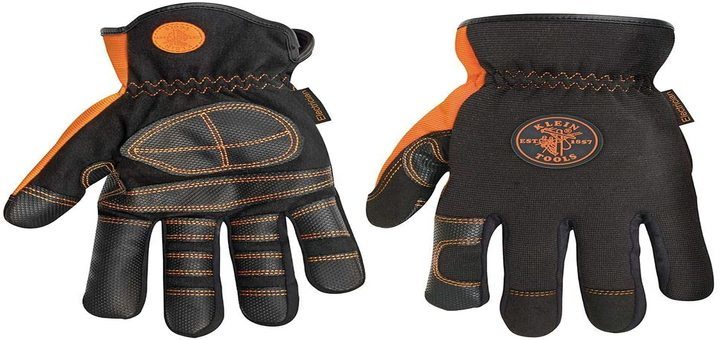
Klein Tools® Unisex 40082 Lineman Soft Grain Leather Lineman Work Gloves


The Klein Tools 40082 is a leather lineman work glove with padded knuckles. It is not an insulating glove.
- The palm and finger patches are reinforced soft grain leather, and the back is spandex for stretch.
- The cuff is 4 inches long and the sides are vented.
- It is made in the USA, and this pair is a large.
2
Mechanix Wear® Unisex M-Pact DuraHide Framer Fingerless Leather Framer Gloves


The Mechanix Wear M-Pact Framer is a fingerless leather glove with impact padding. It is not an insulating glove.
- The thumb, index and middle fingers are free, and the DuraHide leather palm has D30 padding for impact and vibration.
- Thermoplastic rubber covers the back of the hand, and the impact protection is rated to the EN 388 impact standard.
- The back is TrekDry material that lets air through. This pair is a brown large.
3
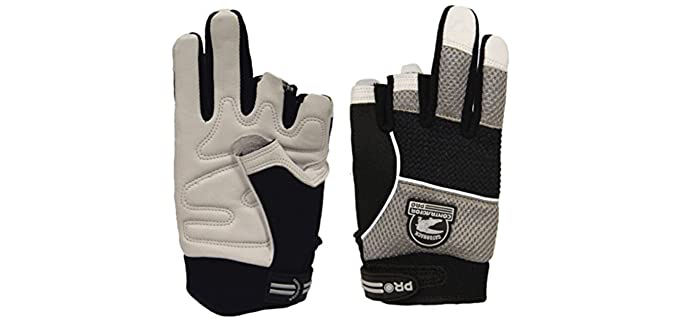
Gatorback® Unisex 634 Fingerless Fingerless Goatskin Work Gloves


The Gatorback 634 is a fingerless goatskin glove for framers, carpenters and electricians. It is not an insulating glove.
- Neoprene covers the knuckles, and the palm has built-in padding for grip.
- The leather is genuine goatskin, and Gatorback gives a one-year defect warranty.
- This pair is a medium.
4
MaxiFlex® Unisex 34-874 Ultimate Nitrile-Coated Grip Gloves, 3 Pairs


The MaxiFlex 34-874 is a three-pack of light nylon gloves with a nitrile coating on the palm and fingertips. It is not an insulating glove.
- The nylon knit is seamless, and the fingertips are smooth and rounded for feel.
- The coating gives grip in dry and slightly wet or oily conditions, and the gloves are machine washable.
- This pack is a large.
5
Superior Glove® Unisex Dexterity S13FRNE Flame-Resistant Arc Flash Gloves


The Superior Glove Dexterity S13FRNE is a flame-resistant work glove with a neoprene palm and an arc flash rating.
- The arc flash test placed it at level 2 with an ATPV of 11 cal/cm2.
- It also has an anti-static carbon filament for ESD control and an ASTM cut level 4.
- An arc rating and an anti-static filament do not make a glove insulating, so this glove does not replace rubber insulating gloves. This pair is a single extra small.
6
Enespro® Unisex Class 0 Kit Class 0 Insulating Rubber Glove Kit


The Enespro Class 0 kit is the only true insulating glove in this guide, a pair of rubber gloves with leather protectors.
- The kit has 11 inch insulating gloves, 10 inch leather protectors and a storage bag, in size 10.
- The gloves are rated for 1,000 V AC or 1,500 V DC, and the seller lists ASTM D120 and NFPA 70E.
- Inspect them before each use for cracks and tears. Sizes run 8 to 12, and colors are red, black and yellow.
Index Table: Top Rated Electrician Gloves
| No. | Product | Image | Features | Brand | Score |
|---|---|---|---|---|---|
| 1 | Klein Tools Unisex 40082 Lineman - Soft Grain Leather Lineman Work Gloves |  |
| Klein Tools | - |
| 2 | Mechanix Wear Unisex M-Pact DuraHide Framer - Fingerless Leather Framer Gloves |  |
| Mechanix Wear | - |
| 3 | Gatorback Unisex 634 Fingerless - Fingerless Goatskin Work Gloves |  |
| Gatorback | - |
| 4 | MaxiFlex Unisex 34-874 Ultimate - Nitrile-Coated Grip Gloves, 3 Pairs |  |
| MaxiFlex | - |
| 5 | Superior Glove Unisex Dexterity S13FRNE - Flame-Resistant Arc Flash Gloves |  |
| Superior Glove | - |
| 6 | Enespro Unisex Class 0 Kit - Class 0 Insulating Rubber Glove Kit |  |
| Enespro | - |
Sources
- Occupational Safety and Health Administration (OSHA). 1910.137 – Electrical protective equipment. Accessed October 27, 2026.
- Occupational Safety and Health Administration (OSHA). 1910.138 – Hand protection. Accessed October 27, 2026.
Update History
- Oct 2026: Rewrote the article around OSHA 1910.137 and 1910.138, corrected the class table and the test intervals, separated the one true insulating glove from the work gloves, removed the old score table, rewrote all product notes and added Sources
- Jun 2021: Published


