Toddlers pull their gloves off, lose them and play hard in them, so a good pair is one that stays on and keeps hands warm. This guide covers what to look for and three pairs: a knit glove, a hat-and-glove set and a mitten.
The American Academy of Pediatrics says insulated boots, mittens or gloves and a hat are essential, and that several thin layers keep kids warm and dry.[1]
This article is general information, not medical advice. Call your pediatrician if your child’s fingers stay numb or painful after warming up.
Toddler gloves at a glance
- The AAP says children lose heat faster than adults because their bodies are smaller, and that they may not come in when they get too cold.[1]
- It says to change a child out of wet clothes right away, and to avoid playing outside when the temperature or wind chill is below -15 degrees Fahrenheit.[1]
- The AAP says mittens are warmer than gloves, and that tight gloves can interfere with circulation.[2]
- Frostbite turns skin white or pale gray, and it can burn or go numb. If the pain or numbness lasts more than a few minutes after warming up, call your pediatrician.[1]
- The three picks are a knit glove for ages 2 to 6, a hat-and-glove set and a pair of mittens.
Toddler Gloves and Mittens
Four things matter when you choose gloves or mittens for a toddler:
- Keeping Them On – Choose a glove or mitten with a closure the child cannot open, or one that fits snugly so it does not slip off.
- Sizing – Most come in standard sizes for age ranges. Stretchy materials and simple closures make them easier to put on.
- Soft Fabric – Soft, breathable fabric with no irritants is comfortable, and durable material lasts through active play.
- Weather – For wind and wet snow, choose windproof and waterproof. A knit or fleece glove is enough for mild winters.
Tips for Keeping Toddler Gloves On
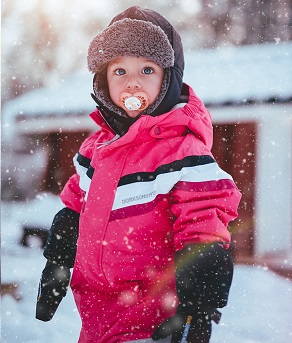
- Mittens Over the Coat – A mitten that covers the coat sleeve is harder to pull off and keeps the wrist covered.
- Cinching Them Down – A strap or a hook-and-loop closure keeps the mitten on the wrist.
- Let Your Child Choose – A color or print your child picks makes them more willing to wear it.
Mittens vs Gloves for a Toddler
- Mittens – Keeping the fingers together keeps them warmer. The AAP says mittens are warmer than gloves.[2] They give less dexterity for picking things up.
- Gloves – Gloves give freedom of movement for play, but they are less warm than mittens and suit milder weather better than snow.
Features of a Good Toddler Glove
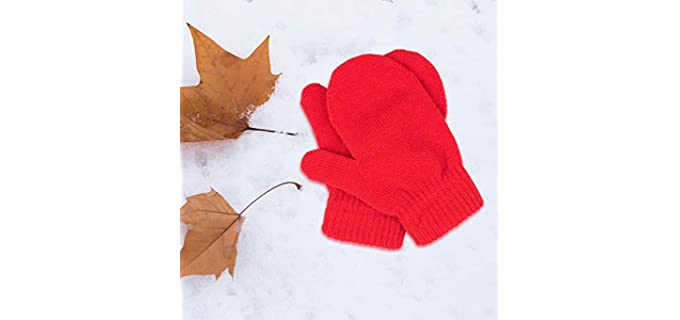
- Breathability – Wool, acrylic and cotton are light and breathable for busy toddlers.
- Wind Protection – A windproof outside keeps cold air out and heat in.
- Insulation – Mittens usually have fleece or another insulator inside.
- Water Resistance – A water-resistant or waterproof outside keeps hands dry, and the AAP says to change wet clothes right away.[1]
- Fit – Not tight. Tight gloves can interfere with circulation.[2]
How We Chose These Toddler Gloves
These picks come from research. This is desk research. We compared the manufacturer specifications and product descriptions for each pick. We did not test the gloves ourselves, and we did not check stock this time.
We looked at these factors:
- Fit – Age range, stretch and sizes.
- Warmth – Glove, mitten or set.
- Fabric – Acrylic, spandex and soft fabrics.
- Colors – Color and print choices a child will wear.
Frequently Asked Questions (FAQ) About Toddler Gloves
- Are mittens or gloves better for toddlers?
Mittens are warmer, because the fingers stay together. Gloves give more movement but are less warm.[2] - How do I keep gloves on a toddler?
Choose a mitten that covers the coat sleeve or one with a strap or hook-and-loop closure, and let your child pick the color. - How many layers should my child wear?
The AAP says several thin layers, with insulated boots, mittens or gloves and a hat.[1] - When should my child stay inside?
The AAP says to avoid playing outside when the temperature or wind chill is below -15 degrees Fahrenheit, and to set limits on time outside with indoor breaks to warm up.[1] - What are the signs of frostbite?
Skin that is white, pale gray or blistered, or that burns or goes numb. Bring your child indoors, warm the area in warm (not hot) water and do not rub it. Call your pediatrician if the pain or numbness lasts more than a few minutes.[1]
Our Picks: Toddler Gloves
Here are 3 toddler gloves and mittens, a knit glove, a hat-and-glove set and a mitten.
We hope you love the toddler gloves we recommend!
So that you know, we may earn a share of sales or other compensation from links on this page. This does not change your price.
1
Gelante® Unisex Winter Knit Knitted Gloves for Toddlers


The Gelante is a knitted glove for children ages 2 to 6, made of soft acrylic with spandex.
- The stretch helps the glove fit and gives the fingers freedom.
- It comes in many colors and prints, so you can buy more than one pair.
2
Nike® Unisex Swoosh Gloves and Hat Set for Toddlers


The Nike Swoosh is a hat-and-glove set for toddlers, in many colors and patterns.
- The fabric is soft, and it works as a light layer from spring to autumn as well as in winter.
- The sizes are small, so it suits older toddlers best in the larger sizes.
3
Menoly® Unisex Magic Stretch Knit Mittens for Toddlers


The Menoly Magic Stretch is a pair of knit mittens made of soft acrylic and spandex.
- The stretch design fits little hands comfortably.
- They come in many colors and sizes for boys and girls, and the low price makes a second pair easy.
Index Table: Top Rated Toddler Gloves
| No. | Product | Image | Features | Brand | Score |
|---|---|---|---|---|---|
| 1 | Gelante Unisex Winter Knit - Knitted Gloves for Toddlers |  |
| Gelante | - |
| 2 | Nike Unisex Swoosh - Gloves and Hat Set for Toddlers |  |
| Nike | - |
| 3 | Menoly Unisex Magic Stretch - Knit Mittens for Toddlers |  |
| Menoly | - |
Sources
- HealthyChildren.org (American Academy of Pediatrics). Playing Outside in Winter: Tips to Keep Kids Warm and Safe. Accessed October 27, 2026.
- HealthyChildren.org (American Academy of Pediatrics). Frostbite. Accessed October 27, 2026.
Update History
- Oct 2026: Rewrote the article around American Academy of Pediatrics winter safety guidance, removed the first-person claims and the old score tables, added a short health disclaimer, fixed names in the product notes, rewrote all product notes and added Sources
- Jun 2020: Published


